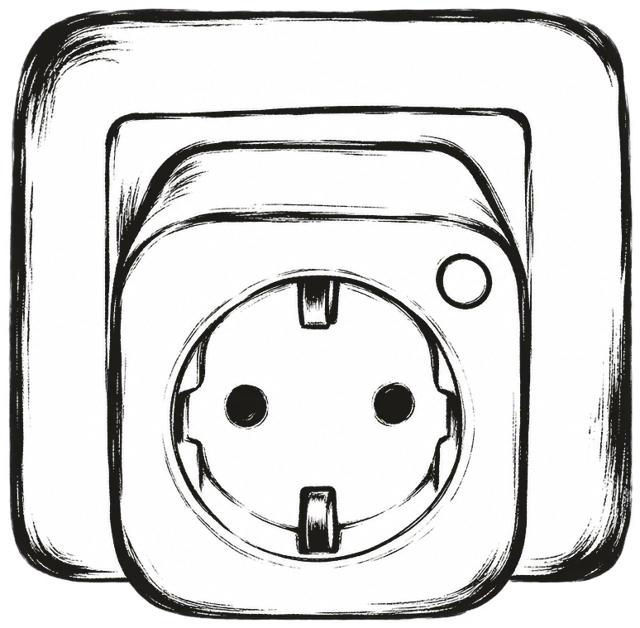
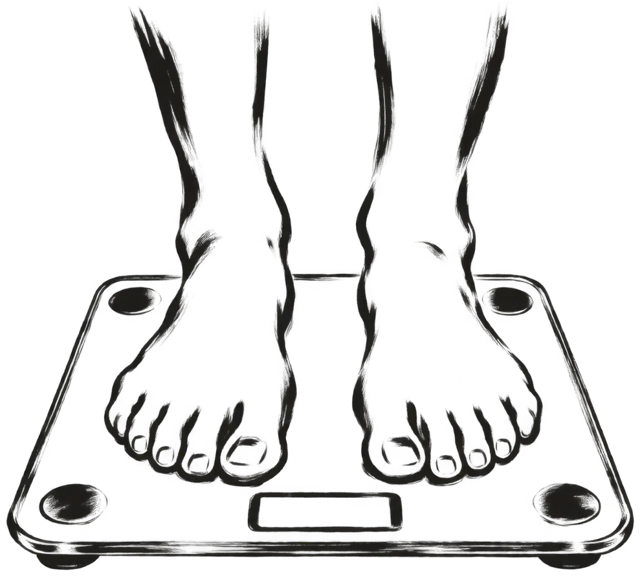
A router, an earbud, a bulb, a plug, a toothbrush and the bathroom scale.
There is a router under the stairs, blinking at nobody, and a toothbrush that wants an app. Most of the technology in a home is like that: slightly over-promised and bought in a hurry. TechMonk is a small independent publisher, and these six are its subjects.
Guides
Six things, four topics, four guides so far. Each is about a thing you probably own and what the box did not say.
- Network and Wi-Fi Where to put the router
The engineer left the socket in the cupboard. What to do about that, and when a second unit earns its money.
- Smart home Before you buy a smart plug
A lamp comes back on; a television just sits there. The guide sorts the house into those two piles, and asks one question about the broadband first.
- Audio and hearing What noise cancelling can and cannot do
The fridge disappears and the conversation stays. Why, and what that does for your hearing over the years.
- Health and personal care What a bathroom scale actually measures
Strain gauges, a small current and an equation: what each number on the screen rests on, and how to get something useful from it anyway.
The words on the box
A glossary of what the packaging says, in plain English.
Network and Wi-Fi
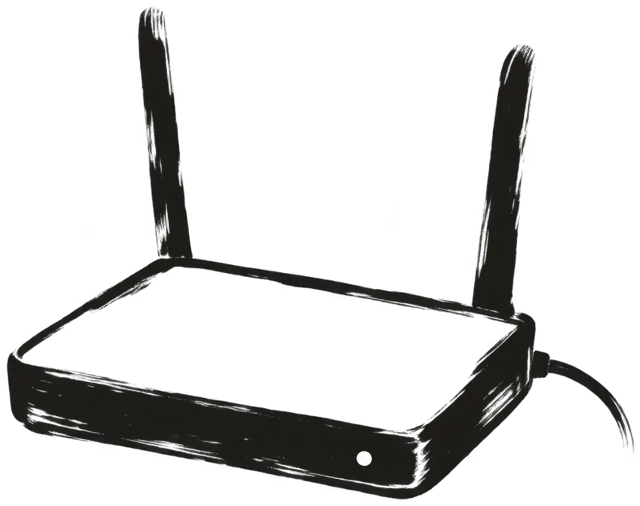
Mesh Two or more units that agree to be one network. You keep one name and one password, and your phone moves between them on its own. Where the second unit should stand is in Where to put the router.
2.4 and 5 The two radio bands most routers use, in gigahertz. The lower one reaches further and the higher one carries more. Newer routers add a third band at 6 GHz: quicker again, and shorter in reach than either.
Megabits Broadband is sold in megabits a second. Files are measured in megabytes. A byte is eight bits, so a 100 megabit line moves 12.5 megabytes a second at best.
Ethernet A cable. Steadier than Wi-Fi and usually faster, so plug in anything that never moves, such as a television or a desktop computer.
Speed on the box The figure on the packaging adds up every band’s best case on paper, as if every band were full at once. No single phone will ever see it, and the line from the street is usually slower than any one band.
Smart home

Smart bulb A bulb with a radio inside, so the lamp can be dimmed or coloured from a phone. The wall switch has to stay on, which is the first thing the whole household has to learn.
Smart plug A switch for the socket, worked from a phone or by a schedule. It cuts and restores the power; it cannot press the button on the thing. What that rules in and out is in Before you buy a smart plug.
Hub A small, plain box that speaks two languages. One is the short-range radio your bulbs and sensors use, the other the home network your phone is on, and it carries messages between the two. If the packaging says ‘hub required’, the hub is part of the price.
Local control Switching that stays inside the house, so the light still answers when the broadband is down.
Audio and hearing
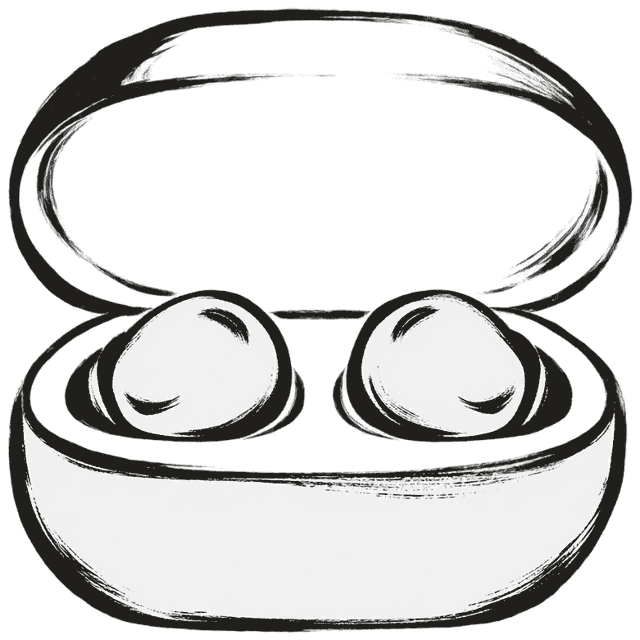
Noise cancelling Microphones on the outside hear the drone, and the headphones play its mirror image into your ear. Steady noise cancels well; voices and doors do not. The reasons are in What noise cancelling can and cannot do.
Decibels A scale that climbs by multiplying. Three decibels more is double the power, and sounds like one small step up.
20 Hz to 20 kHz The range of human hearing, printed on almost every speaker and headphone as if it were a measurement. Without a tolerance, plus or minus so many decibels, it is not one.
Battery The cell in an earbud is the size of a shirt button and almost always sealed in. When it wears out, the earbuds usually go with it.
Health and personal care
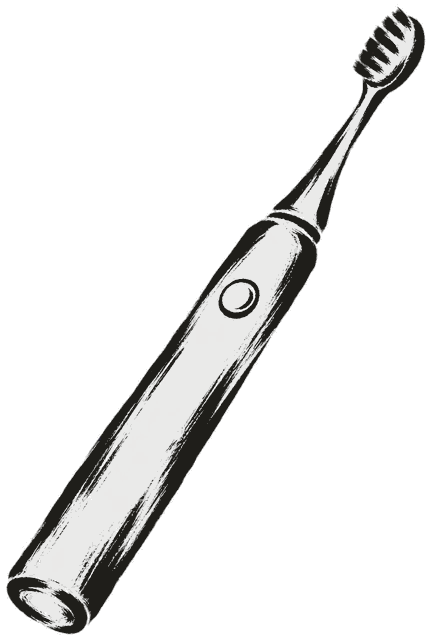
Sonic, oscillating Either way, the head wiggles. What the dentist asks for is two minutes, twice a day, a soft brush and a light hand. The timer and the pressure light are the features that earn their keep.
Body fat, from a scale A guess made from how easily a small current crosses you, since fat resists it more than muscle does. Weight is measured; this is estimated. How the estimate is made is in What a bathroom scale actually measures.
IP67 Two figures. The first is solids, from 0 to 6, and only 5 and 6 mean dust. The second is water, from 0 to 9. A 7 means the thing survived half an hour a metre under still, fresh water in a laboratory. Sweat, soap and hot water are not part of the test.
If a word on a box has beaten you, tell us.
Before you buy
Six questions worth a minute at the till.
- Will it work without the app? Try the switch on the thing itself in the shop. If there is no switch, the phone is part of the purchase.
- What will it cost next year? Batteries, filters, a subscription, and the hub that was not in the box.
- Can the battery be changed? If not, the battery decides how long the thing lasts.
- Is the number a measurement or a slogan? A range with no tolerance, a speed no phone can reach, a star rating with no test behind it.
- What happens when the company stops? A device that depends on someone else’s server stops with it. Look for the ones that still work on the home network alone.
- Where will it live? A router in a cupboard and a scale on a carpet both disappoint.
House rules
- Value is what a thing costs set against what it does. Not what it promises, and not what the label says it was reduced from.
- No exclamation marks, and no word we would not say to a neighbour.
- Wi-Fi with the hyphen, because the people who own the name write it that way.