Guides · Smart home
Before you buy a smart plug
It switches the socket, not the thing in it. That one fact decides what it is good for.
What a smart plug does
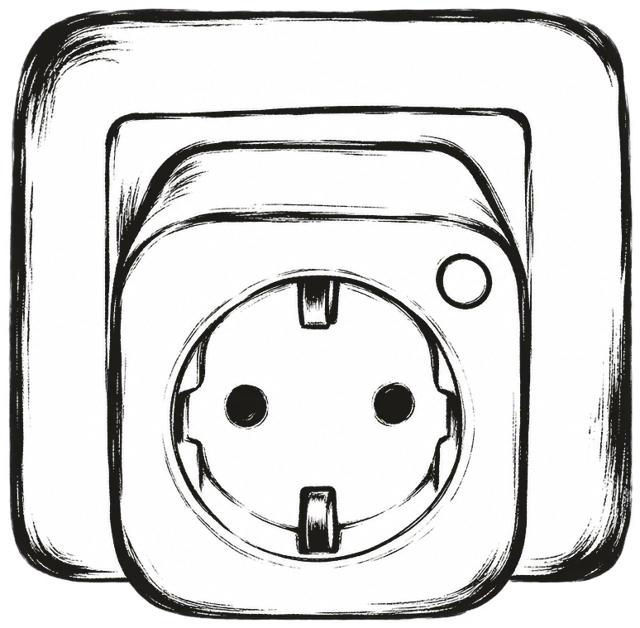
It sits between the socket and the appliance and switches the power on and off, on a schedule or from your phone. Anything that simply runs when it has power is a good match: a lamp, a fan with a plain switch, a string of lights, a radio. Check the load rating printed on the plug against the label on the appliance. If the plug gives its rating in amps, multiply by the mains voltage, 230 volts across Europe, to get watts. Heaters and kettles draw a lot, and a plug rated below them is a fire risk, not a bargain. Even with the right rating, do not use one to switch on a heater you cannot see.
What it cannot do
Most televisions, many coffee machines and anything with a soft power button wait for a press after the power comes back. A smart plug gives them power and nothing else happens. Anything with its own clock or timer is a poor match too, because cutting the power usually resets the clock and sometimes the settings. If the thing has a standby light, assume it will not come back on by itself.
The question to ask first
Does it still work when the broadband is down? Some plugs keep their schedule and answer to a switch on the home network. Others send every tap on your phone to the maker’s server and back, and go dumb the moment the connection drops. The packaging rarely says which. Look for the words ‘local control’, or for a plug that works through a hub on Zigbee or Thread, which keeps the switching inside your house.
Some plugs, many bulbs and most battery-powered sensors use a short-range radio of their own, and need a small, plain box called a hub to carry messages to the home network. If the packaging says hub required, count the hub in the price, and count the socket it will need near the router, because that is usually where it ends up living.
The energy question
A smart plug itself uses a little power all the time, around a watt, which over a year adds up to several units of electricity. A plug that shows how much the appliance is drawing can earn that back. It can show which appliance is quietly costing you, which is often an old fridge or freezer.
More guides
- Network and Wi-Fi Where to put the router
The engineer left the socket in the cupboard. What to do about that, and when a second unit earns its money.
- Audio and hearing What noise cancelling can and cannot do
The fridge disappears and the conversation stays. Why, and what that does for your hearing over the years.
- Health and personal care What a bathroom scale actually measures
Strain gauges, a small current and an equation: what each number on the screen rests on, and how to get something useful from it anyway.